
8 proven ways to Rank Higher on Google in 2026 (Without Backlinks or Ads)
Table of Contents
ToggleIf you’re looking for simple, practical ways to rank higher on Google, you’re not alone.
Millions of business owners wonder why certain websites rise to the top — while theirs gets buried.
The truth?
With the rise of AI search, shifting algorithms, and new content standards, ranking high on Google today means understanding both classic SEO and modern search behavior.
The good news?
Ranking better doesn’t require fancy tools or deep technical knowledge. It starts with clarity, structure, user satisfaction — and consistency.
Below is your updated, modern guide on how to rank high on Google — written in a way that’s easy to follow and apply.
Fix Your Website’s Foundation (Google Ranks Experiences, Not Just Pages)

Before applying any strategy, you must know your what’s stopping you from ranking higher.
.
Most websites fail to rank because of one (or more) of these common issues:
Slow loading speed
Thin or outdated content
Zero topical depth
Poor internal linking
No authority signals
Weak local/brand presence
Missing metadata and poor formatting
When you fix the foundation, everything else compounds — and that’s when you start seeing real movement in your Google rankings.
How Does Google (and AI) Rank Pages Today?
Search engines don’t just match keywords anymore. They evaluate meaning, context, brand authority, and how satisfied users feel after reading your content.
Here’s what that looks like behind the scenes:
Let's understand Google’s Passage-Level Intent Matching
Google evaluates content passage by passage, meaning even a subsection of your article can help you rank higher.
This is why clear structure matters — Google has to “understand you” instantly.
How AI (LLM) Summarization Shapes Search Visibility
AI models like Gemini, ChatGPT, and SGE pull information from the web based on clarity + trustworthiness. These tools summarize content to identify
clarity
helpfulness
confidence
expertise
If your content is confusing, AI won’t rank or recommend it — which affects your visibility across the search ecosystem.
The Power of Brand Mentions (Even Without Backlinks)
Google learns who you are through:
business listings
mentions on other sites
reviews
podcasts
social snippets
You can rank higher on Google even without backlinks if your brand shows up in the right places.
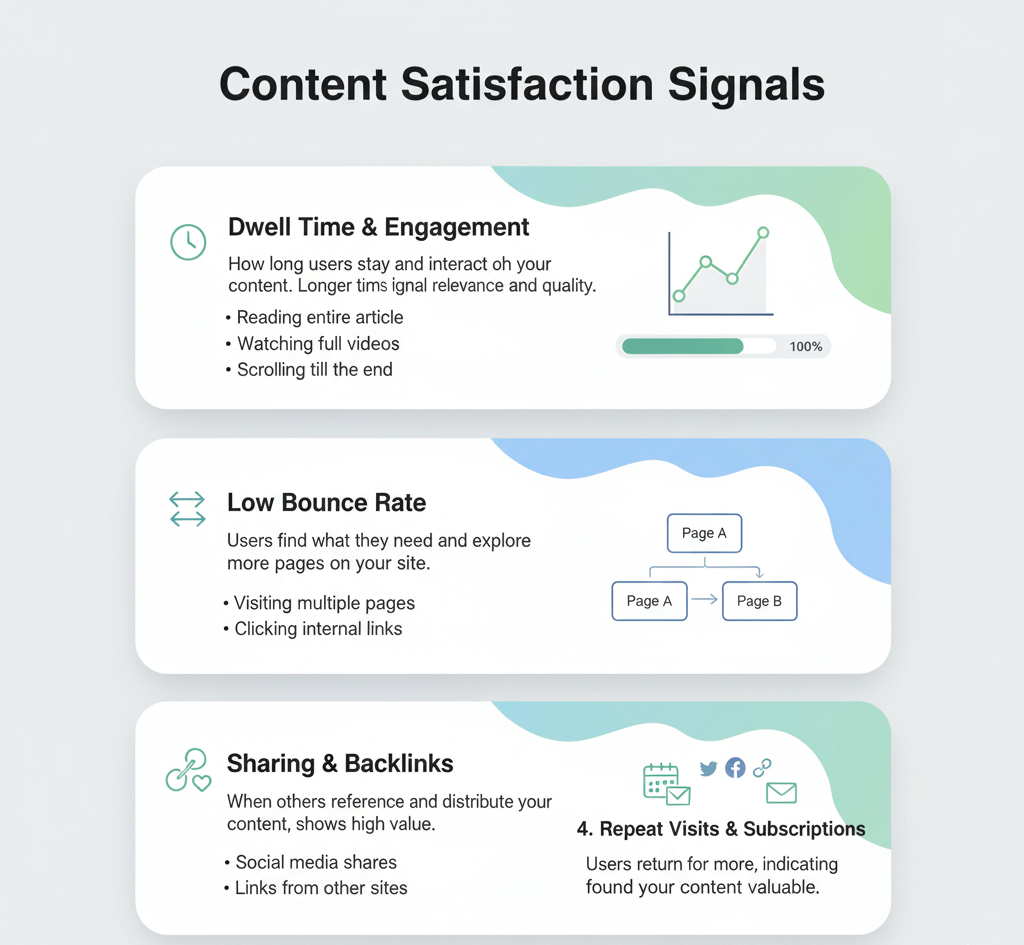
Why “Content Satisfaction” Is the New SEO Ranking Signal
Google now analyzes:
scroll depth
time spent on page
rage clicks
pogo-sticking (quick back-and-forth from search results)
Happy readers = better rankings.
Tip #1: Strengthen Your Core SEO Fundamentals
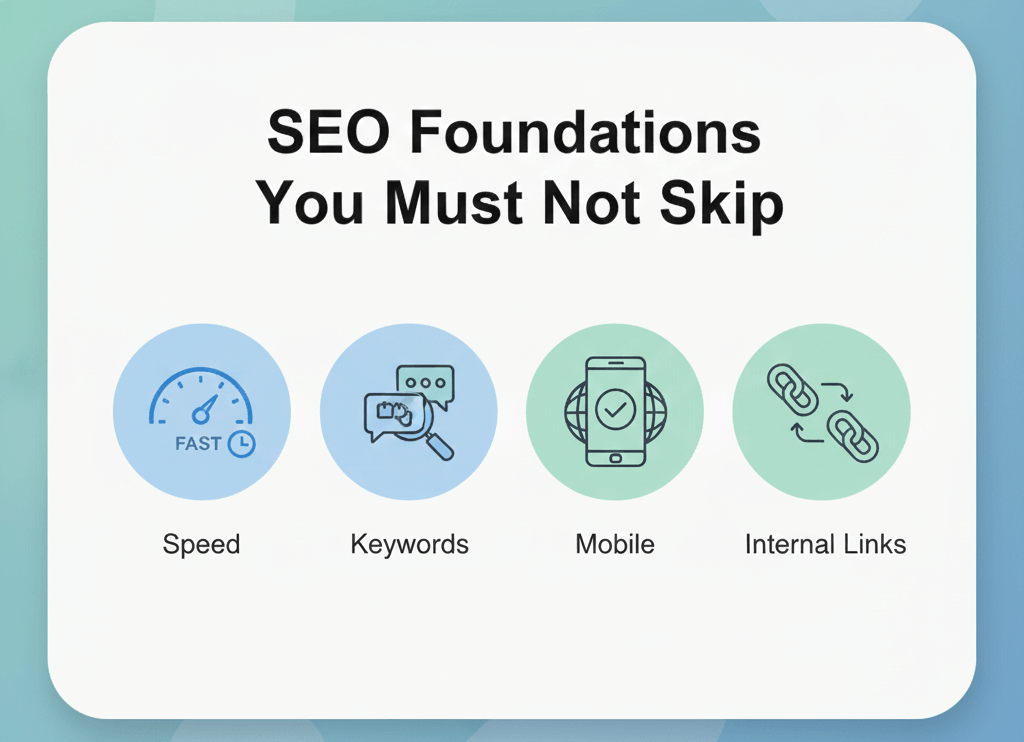
This is where 90% of business websites fall short.
Get Your Keyword Targeting Right
To rank higher on Google, Google needs to know what your page is about.
Use your main keyword (“Rank Higher on Google”) in:
Title
First 100 words
1–2 subheadings
Meta description
URL slug
That’s enough.
Google hates keyword stuffing, and so do humans.
Boost Your Site Speed for Higher Rankings
Fast sites rank higher. Test your site using:
PageSpeed Insights
GTmetrix
Fix large images, unused plugins, and slow themes.
Make Sure Your Website Is Truly Mobile-Friendly
Over 60% of searches are mobile. If your site isn’t mobile-friendly, your Google ranking won’t improve.
Add Smart Internal Links to Boost Topical Relevance
Internal links help Google understand your site’s structure. Use them to boost topical authority and help users find related content.
This tells Google:
what pages relate to each other
what pages are most important
which topics you specialize in
Tip #2: Improve “User Satisfaction” Inside Your Content
Use Short, Simple Sentences for Better Engagement
Short paragraphs reduce friction and keep users engaged.
Format Your Content So It’s Easy to Scan
Google prefers content people can scan quickly.
Use:
bullet points
short lines
meaningful spacing
Use Images & Examples to Keep Readers Engaged
Visuals increase dwell time — a major ranking signal.
Use:
screenshots
short diagrams
real-world examples
Tip #3: Create Content That’s Easy to Follow
Organize Your Article With Meaningful Headings
Your H1 → H2 → H3 structure should make instant sense.
Help Users Navigate With a Table of Contents
This helps both users and Google understand your content flow.
Start With What Matters Most (Inverted Pyramid Method)
Start with the answer, then add details later.
This mirrors how Google surfaces summaries in search results.
Tip #4: Cover Your Topic Deeply — Not Broadly
If you want to rank higher on Google, become the website that answers every angle of one topic.
Example:
If your niche is “Legal Services” write about Laws, Precautionary tips, documents to consider, legal rights, etc.
Tip #5: Create Topic Clusters Using Intentional Internal Links
Topic clusters help Google understand the depth of your expertise — not just that you sell something, but that you know the space well. Think of topic clusters as “content neighborhoods.” Every related page you create strengthens the authority of the main hub.
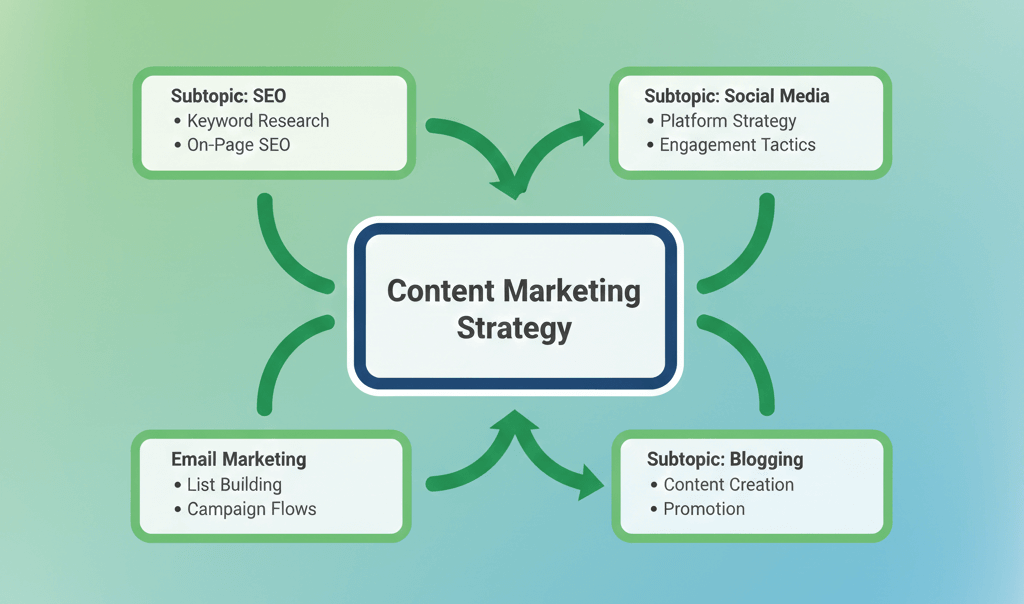
Let’s consider and example of a clothign brand
Main Pillar Page:
Ultimate Guide to Choosing the Right Outfit for Any Occasion
Supporting Pages:
How to Style Casual Wear for Everyday Comfort
The Complete Guide to Formal & Semi-Formal Dressing
Seasonal Outfit Ideas (Summer, Monsoon, Winter Collections)
When you internally link these pages back to your main pillar page — and to each other — Google sees a clear, organized ecosystem of high-value content.
The result?
Better indexing, stronger authority, and significantly higher chances of ranking for multiple related keywords.
Tip #6: Add Related Keywords, Entities & Supporting Topics
Google expects certain terms within topics.
For “ways to rank higher on Google,” related entities include:
keyword research
search intent
content quality
backlinks
PageSpeed
SERP competition
Using these naturally boosts relevance.
Tip #7: Pick the Right Content Format for the Search Intent
Some topics perform better as:
list posts
checklists
comparisons
templates
how-tos
guides
Match the format to the search intent.
Plan Your Resources Before Producing the Content
Avoid spending hours on content without clarity.
Plan your structure first.
Bonus: Repurpose High-Performing Content Into New Formats
Turn your blog into:
reels
carousels
LinkedIn posts
newsletter blurbs
This increases brand presence — which helps you rank higher on Google over time.
Tip #8: Create Content That People Actually Want to Share
Generic content never ranks. Google rewards sites that add real value, not recycled information. If your content doesn’t solve a problem in a unique, useful, experience-driven way, it gets ignored — by both users and algorithms.
Share Unique Data or Insights to Stand Out
Even small original data helps.
Write Lines People Will Want to Quote
Short, powerful lines often get cited.
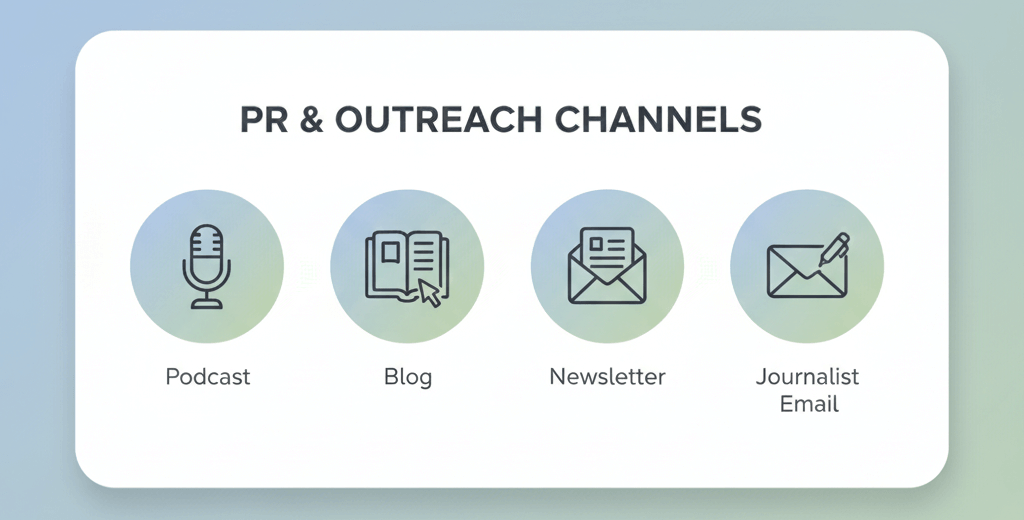
Reach Out to Journalists & Creators for Mentions
Mentions = better authority.
Monitor How Often Your Brand Gets Mentioned Online
Track: Brand mentions, unlinked mentions, competitor analysis.
Why These Mentions Help Your Google Rankings
Mentions create trust signals → trust signals boost authority → and authority helps you rank higher on Google.
Why Google Rankings Still Play a Huge Role in Your Success
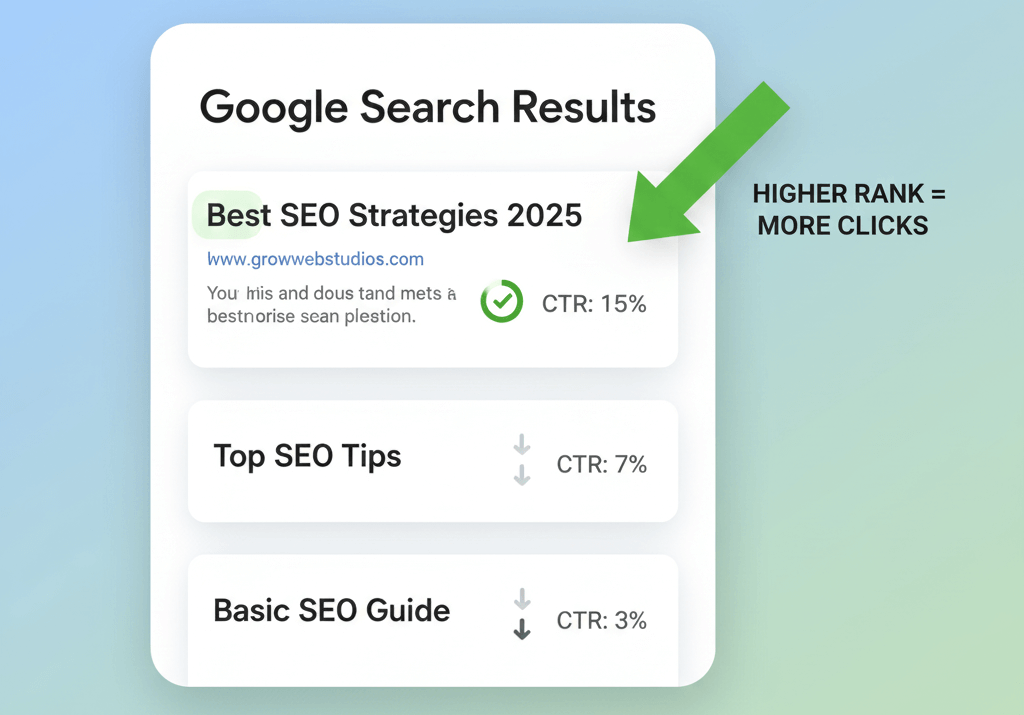
Despite AI search changes, Google is still where buying intent begins.
If you want:
leads
visibility
credibility
sales
long-term business growth
…you need to rank higher on Google.
SEO compounds.
Once your ranking grows, every other part of your marketing becomes easier.
At GrowWeb Studios, we help businesses around the world improve visibility, fix technical issues, and build websites Google — and humans — trust.
If you’d like us to review your site, just send a message.

One Response