
Why GEO Won’t Replace SEO — And What AI Search Is Really Teaching Us
Table of Contents
Toggle
Why GEO Won’t Replace SEO — And What AI Search Is Really Teaching Us
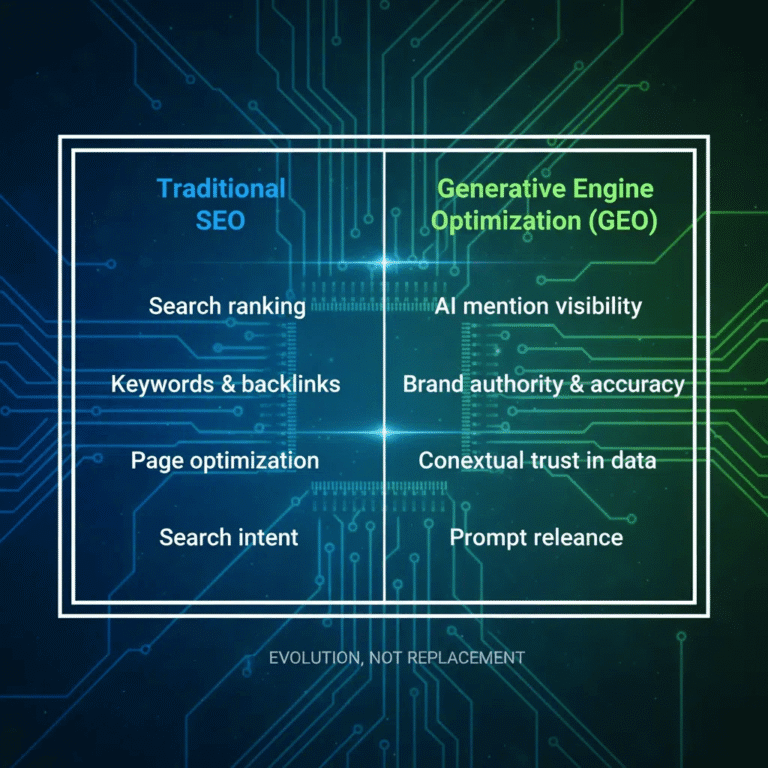
Every few years, a new buzzword shakes up the digital marketing world. This time, it’s GEO — Generative Engine Optimization — a term that’s gaining traction as AI-powered search engines like ChatGPT, Perplexity, and Claude begin to shape how people discover information online.
The promise? To help brands show up inside AI-generated answers the same way SEO helps them show up on Google.
But here’s the truth: after digging deeper, we’ve realized that GEO isn’t a revolution — it’s an evolution of what great SEO already does.
What Exactly Is GEO?
Generative Engine Optimization is the idea of optimizing your content to be cited or mentioned by AI engines in their answers. Imagine your brand being referenced when ChatGPT or Perplexity responds to a user’s query — that’s the new frontier of visibility.
The logic makes sense: if AI models are trained on web content, then optimizing that content should, in theory, help your brand surface in AI-generated responses.
The catch? There’s no consistent formula — because AI models don’t crawl or index the web in real time like Google does.
What a Startup’s Failure Taught Us About GEO
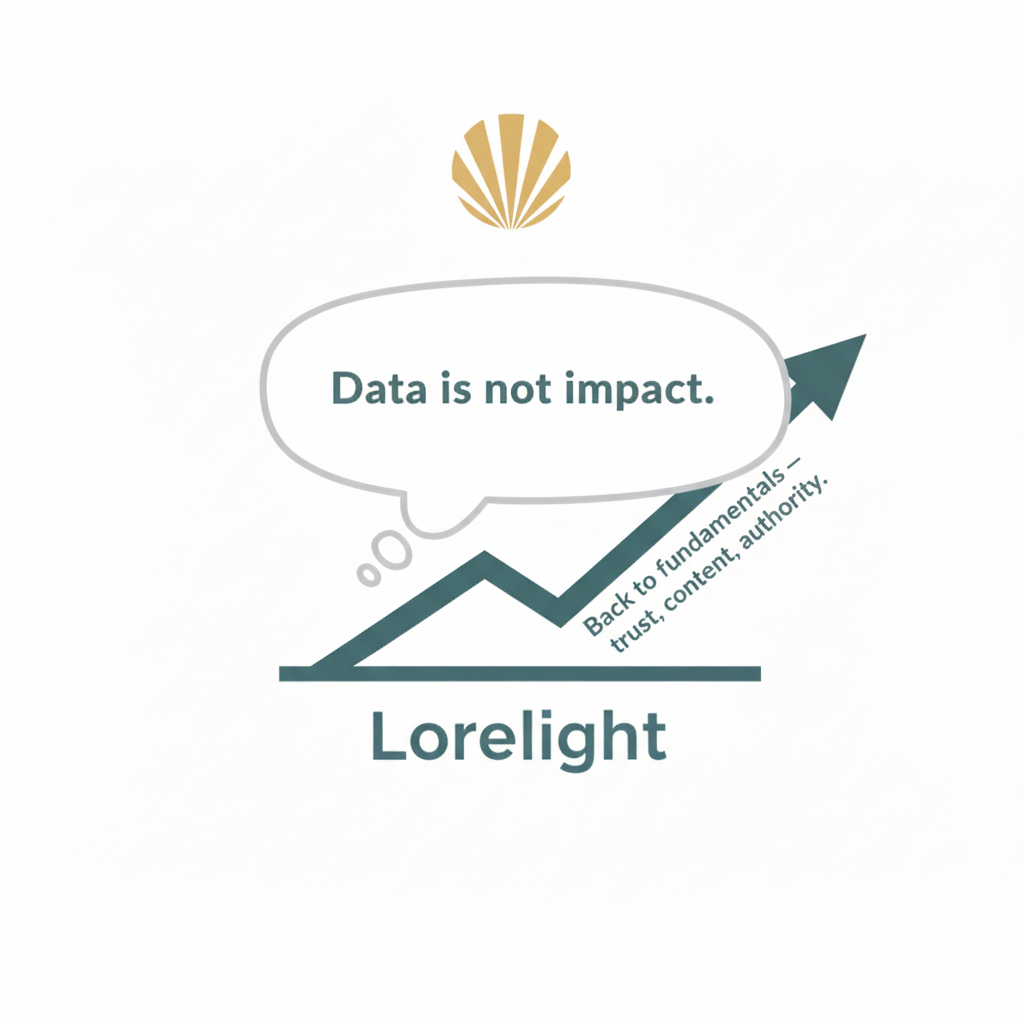
A few weeks ago, Benjamin Houy from Grow With Less shared his story of shutting down Lorelight, a startup built around GEO analytics.
Lorelight helped brands see how often they were mentioned across AI engines. On paper, it sounded brilliant. But as Benjamin later realized — data alone doesn’t drive impact.
Brands could see their mentions, but they didn’t know how to act on that insight. The ones who succeeded weren’t chasing AI algorithms — they were focusing on the same fundamentals that have always mattered:
Building trust and authority through consistent, original content
Becoming the expert in their field
Getting natural mentions and backlinks from reputable sources
In short, AI engines favor brands with substance, not tricks.
GEO ≠ A Shortcut to AI Visibility
Let’s be clear — GEO isn’t snake oil. It’s a real shift in how people discover content. But it’s not a silver bullet either.
At GrowWeb Studios, we’ve experimented with content tuned for AI search visibility. What we found aligns with Benjamin’s conclusion:
AI-generated answers mirror brand authority the same way Google does.
Mentions in top publications often translate to higher inclusion rates in AI search.
Strong topical depth (multiple expert pieces around a subject) increases recognition.
So while GEO feels new, the principles aren’t.
It’s still about clarity, credibility, and consistency.
Where GEO Actually Makes Sense
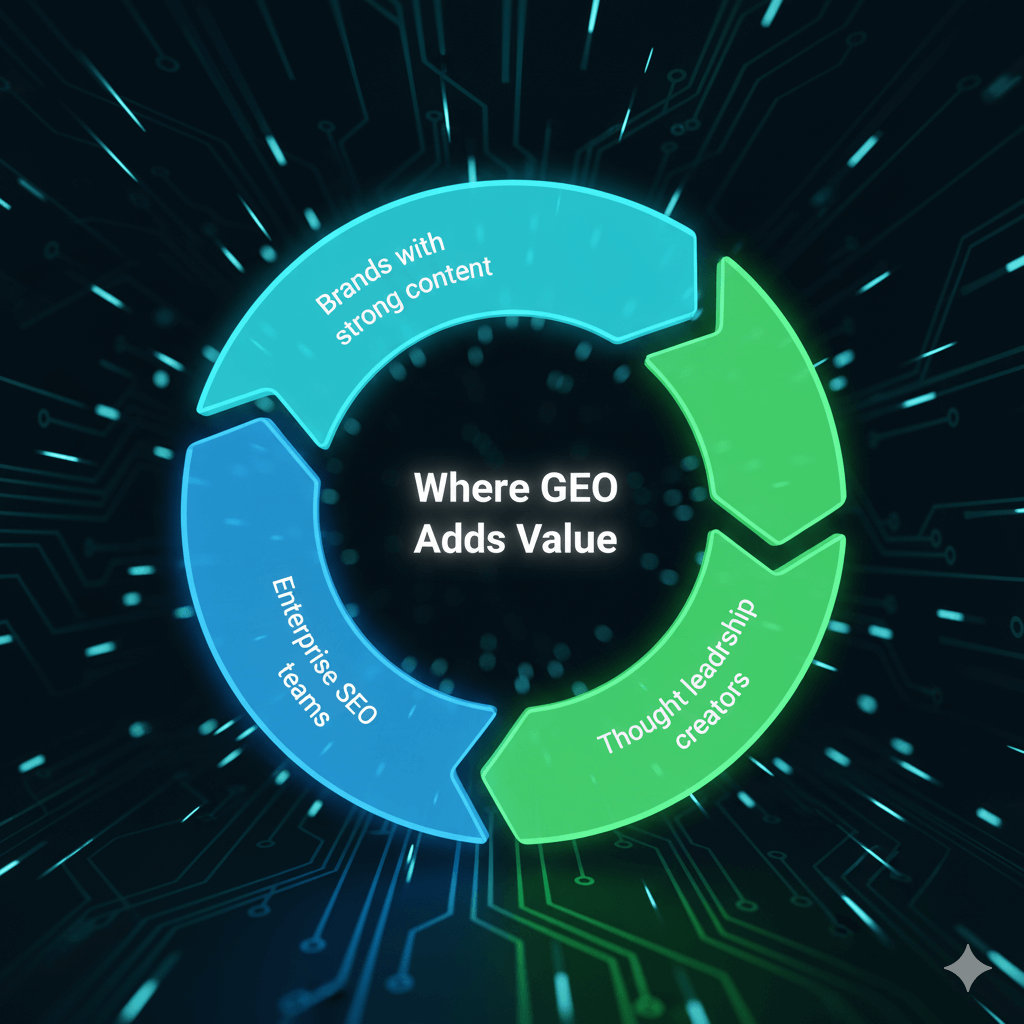
GEO isn’t useless — it’s just misused. For brands with strong content systems, GEO can add another layer of optimization.
Here’s where it matters:
For enterprise SEO teams, it can be used to monitor brand mentions in AI search tools.
For content creators, it encourages writing that’s clear, factual, and trusted by AI models.
For digital agencies, it’s a chance to combine SEO, PR, and thought leadership strategies into one cohesive plan.
The real opportunity isn’t “optimizing for AI.”
It’s building a brand worth being mentioned by AI.
The Fundamentals Still Win
In both SEO and GEO, the long-term winners are always those who:
Publish helpful, original content that solves real problems.
Build recognizable authority in their niche.
Create a strong brand identity that both humans and algorithms trust.
AI tools don’t invent new winners — they amplify existing credibility.
If your brand already ranks well on Google, appears in expert round-ups, and earns mentions in publications, AI engines will likely surface you too.
So the best GEO strategy right now?
Double down on SEO best practices.
Our Take as GrowWeb Studios
We believe GEO is a signpost, not a strategy.
It points toward how AI is reshaping discovery — but it doesn’t replace the fundamentals of SEO.
At GrowWeb Studios, we help brands future-proof their online presence through:
Smart SEO optimization
Brand storytelling that AI and humans both understand
Data-driven content designed to stand the test of algorithms
The future of visibility isn’t about chasing the next acronym.
It’s about building brands that people — and AI — can trust.
The Takeaway
If you’re tempted to chase GEO as “the next SEO,” pause for a second.
Ask yourself:
Are you solving a new problem, or just renaming an old one?
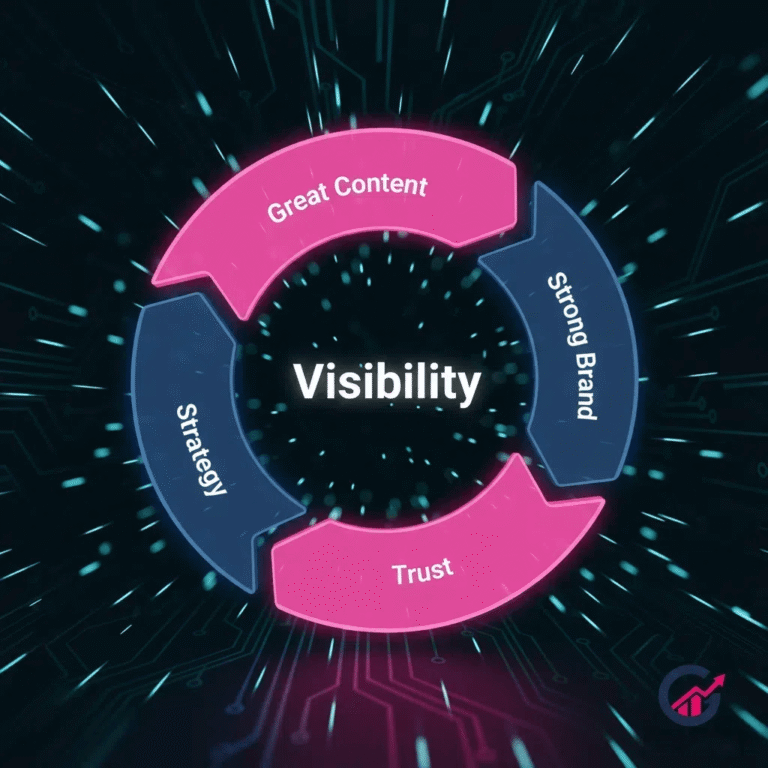
Because at the end of the day, visibility — whether on Google, ChatGPT, or beyond — comes down to one simple formula:
Great content + strong brand + consistent trust signals = visibility anywhere.
Final Thoughts
GEO isn’t dead. It’s just not separate from SEO.
It’s the next step in a journey that began long ago — proving that in every algorithm update, content trend, or new AI engine, one thing stays the same:
Authenticity always ranks.
Frequently Asked Questions
Generative Engine Optimization (GEO) is the practice of optimizing content so that AI-powered search engines — like ChatGPT, Perplexity, or Claude — reference your brand in their responses. It focuses on building authority, clarity, and credibility that AI models recognize.
No. GEO builds upon SEO rather than replacing it. The same principles — quality content, domain authority, and trust — remain key. GEO simply adds a new layer of optimization for AI-generated search visibility.
Brands can increase visibility by publishing expert-level content, earning credible mentions, and focusing on E-E-A-T (Experience, Expertise, Authoritativeness, Trustworthiness). AI engines tend to reference well-established, high-authority brands.
Currently, GEO tools are in their early stages. Some analytics platforms like Perplexity Discover and experimental dashboards from Ahrefs or Lorelight (archived) offer early insights. However, your best tool is still a solid SEO + content strategy.
Businesses should first ensure their SEO and content fundamentals are strong. GEO is valuable for forward-thinking brands, but it won’t produce results unless built on existing authority and high-quality, trustworthy content.

3 Responses